For a service business in the UAE, keeping track of business expenses is essential for understanding where money goes, managing operating costs and making informed financial decisions. Rent, salaries, supplier costs, software subscriptions, transport and other daily expenses can become difficult to monitor when records are scattered across spreadsheets, receipts and different systems.
A consistent expense-tracking process helps you record transactions, organise costs into categories, retain supporting documents and review spending regularly. It also helps you understand your daily cash position without confusing cash flow with profit.
In this guide, you will learn how to track business expenses, establish a practical review routine and understand how expense-management software can help UAE service businesses maintain better financial visibility.
Why Is Business Expense Tracking Important?
Business expenses can accumulate through many small transactions as well as larger recurring payments. Without a reliable record, it becomes harder to understand which costs are increasing, whether transactions have been recorded correctly and how much money is available for upcoming payments.
Consistent expense tracking helps a service business:
- Understand spending: Identify how much the business spends on premises, staff, suppliers, technology and other operating needs.
- Maintain organised records: Keep transaction details and supporting documents easier to locate.
- Review recurring costs: Recognise changes in rent, subscriptions, supplier charges and other regular expenses.
- Support financial decisions: Use recorded expenses and reports to understand business performance more clearly.
- Monitor available cash: Review money received and paid out to help plan upcoming operating payments.
For example, a typing centre may have relatively predictable rent and internet costs but changing expenses for outsourced services, supplies and transport. Recording these costs consistently makes it easier to compare spending across different periods.
Which Business Expenses Should You Track?
The categories you use will depend on your business activities. A useful starting point is to group expenses according to their purpose and apply the same categories consistently.
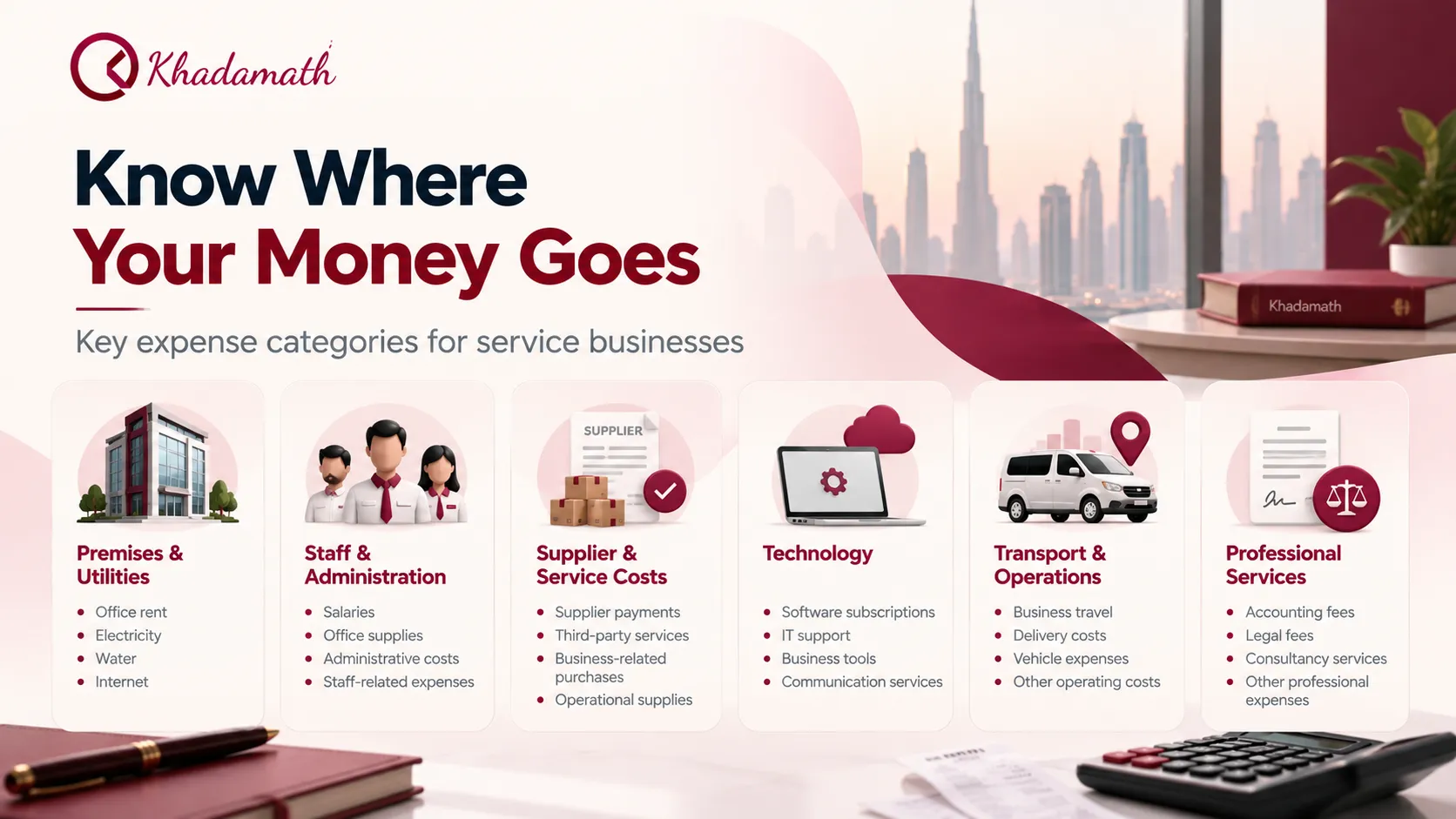
1. Premises and Utilities
Record costs associated with operating your office or service centre, such as:
- Office or shop rent
- Electricity and water
- Internet and telephone services
- Premises-related maintenance
2. Staff and Administration
Depending on your business and accounting treatment, this category may include salaries, office supplies, administrative expenses and other staff-related operating costs.
3. Suppliers and Service Costs
Service businesses may incur costs from suppliers, outsourced service providers and operational purchases. Keep a clear record of the supplier, transaction amount, date and purpose of each expense.
4. Technology and Software
Track business software subscriptions, IT support, communication tools and other technology costs. Reviewing these expenses regularly can help you identify services that need closer attention.
5. Transport and Operations
Depending on your operations, this category can include business travel, delivery costs, vehicle-related expenses and other operating costs.
6. Professional Services
Record relevant accounting fees, legal fees, consultancy charges and other professional services used by the business.
These categories are a practical starting point, not a universal accounting chart. Use categories that fit your operations and accounting requirements, and avoid recording the same transaction in more than one category.
How to Track Business Expenses Step by Step
A reliable expense-tracking process does not need to be complicated. The important thing is to record transactions consistently and review them before missing details become difficult to resolve.
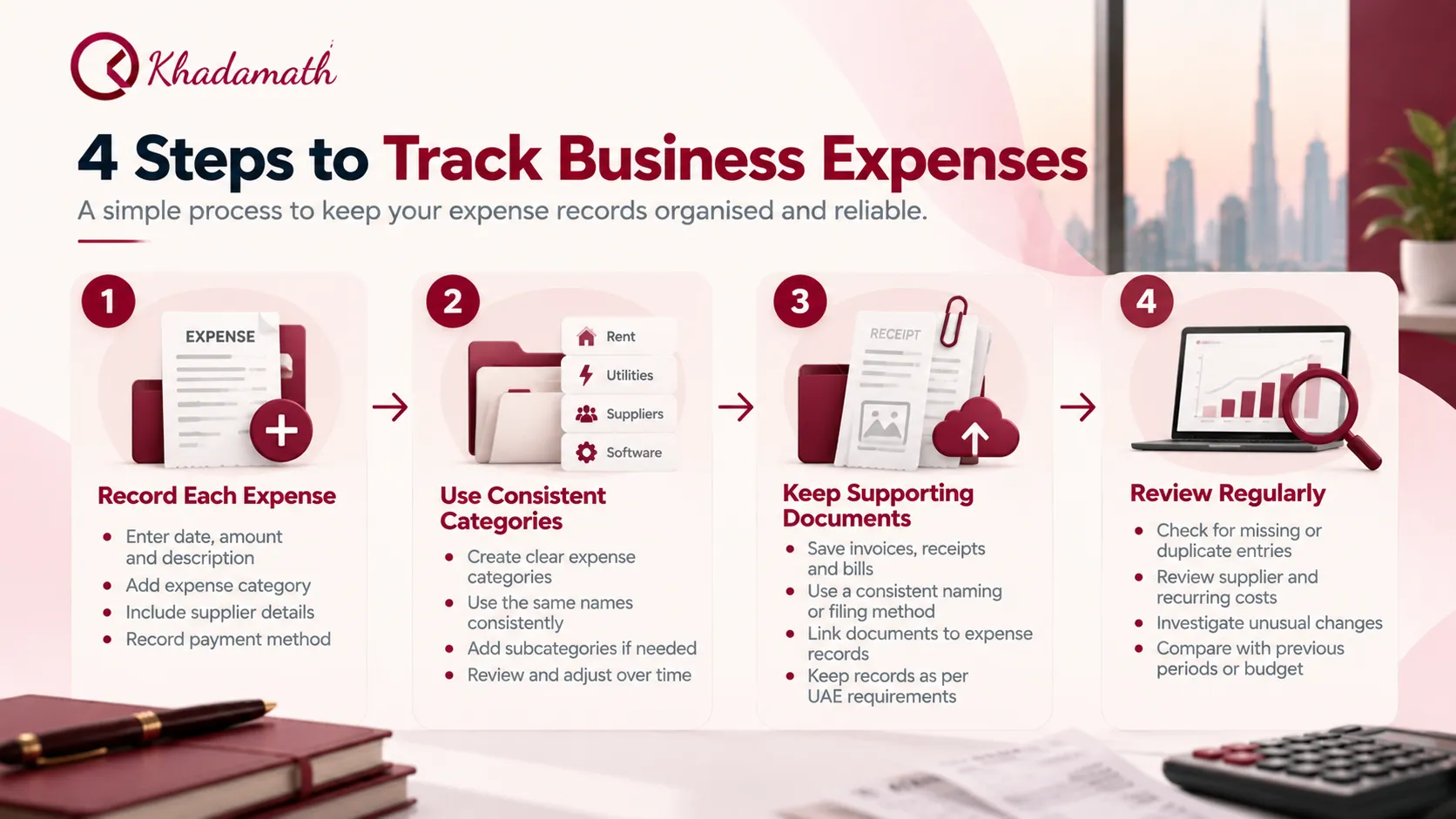
Step 1: Record Each Expense Promptly
Record expenses as soon as practical after a transaction. Capture the date, amount, description, expense category, supplier details and payment information where applicable.
For example, if your business pays for office supplies, record the transaction rather than leaving the receipt aside for later. Delayed entry increases the chance of forgotten transactions, incomplete descriptions and duplicate records.
Step 2: Use Consistent Expense Categories
Choose a practical set of categories and use the same names consistently. If similar transactions are recorded under different labels, comparing spending across periods becomes more difficult.
You can introduce subcategories when they provide useful detail. However, too many categories may make routine recording unnecessarily complicated. Aim for a structure that helps you understand spending without slowing down daily operations.
Step 3: Keep Supporting Documents
Keep relevant invoices, receipts, bills and other supporting records organised so that you can refer to them when reviewing a transaction or preparing records for an accountant.
Where practical, use a consistent naming or filing method. Make sure the supporting document can be connected to the corresponding expense record, and follow the recordkeeping requirements that apply to your business.
Step 4: Review and Verify the Records
Recording expenses is only one part of the process. Review entries to identify missing information, possible duplicates, unusual amounts and unexpected changes in recurring costs.
Compare spending across appropriate periods and investigate differences that need an explanation. A regular review helps you maintain more reliable records and make better-informed operating decisions.
How Often Should You Review Business Expenses?
A practical routine combines frequent transaction recording with scheduled checks. The appropriate frequency depends on the number of transactions, the size of your business and how quickly you need financial information.
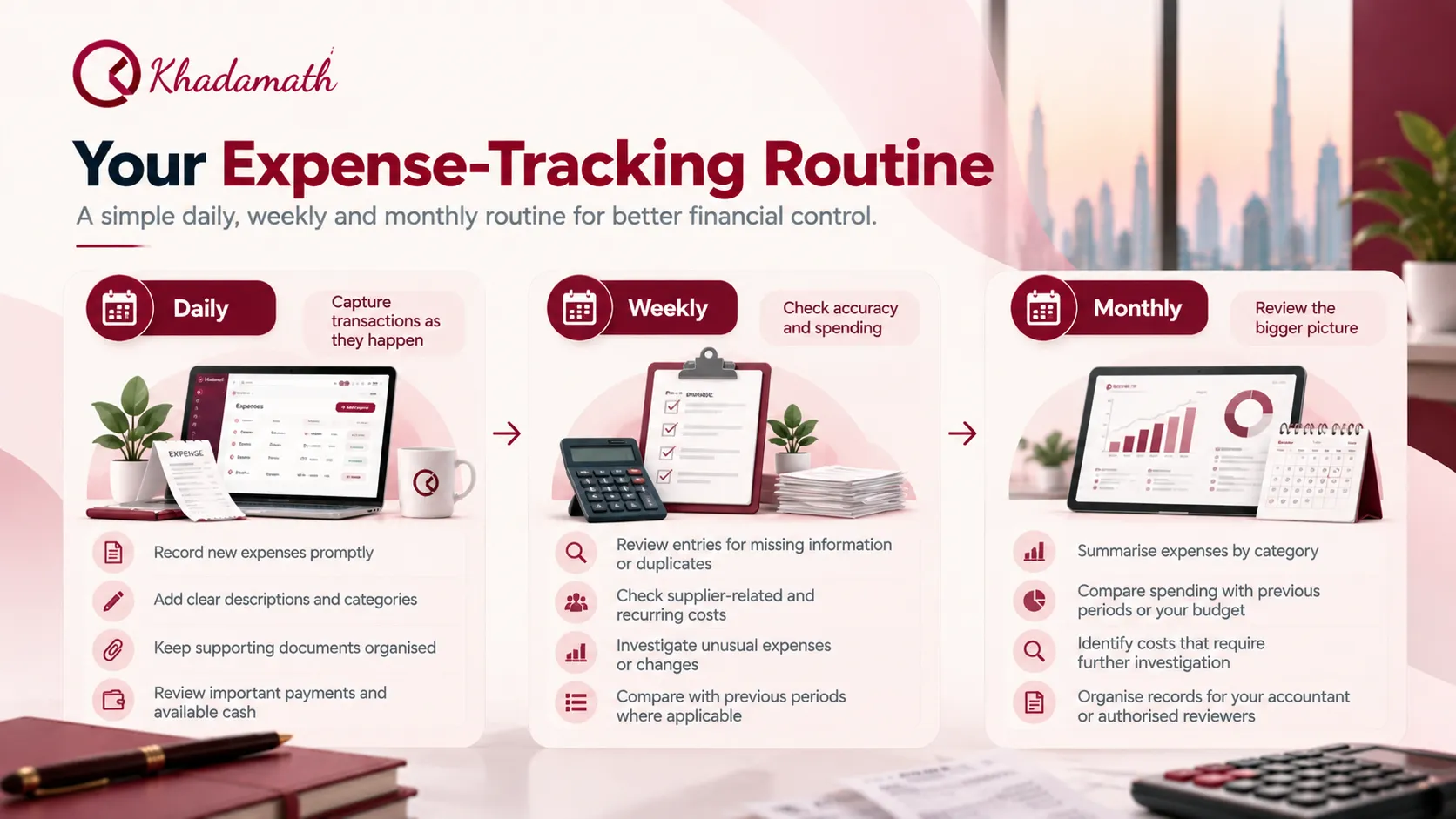
Daily: Record Transactions
- Enter new expenses promptly.
- Use clear descriptions and consistent categories.
- Organise supporting documents.
- Review important payments and the available cash position.
Weekly: Check Accuracy and Spending
- Look for missing information and possible duplicate entries.
- Review supplier-related and recurring costs.
- Investigate unusual expenses or changes.
- Compare spending with previous periods where useful.
Monthly: Review the Bigger Picture
- Summarise expenses by category.
- Compare spending with previous months or your budget.
- Identify costs that need further investigation.
- Organise records for your accountant or authorised reviewer.
This routine can be adjusted to suit your business. The key is to avoid waiting until the end of a reporting period to discover that important transactions or supporting details are missing.
How Does Expense Tracking Support Daily Cash Flow?
Expense tracking helps you understand outgoing payments, but managing daily cash flow also requires reviewing money coming into the business. Together, these records provide a clearer view of the movement of money and help you plan for upcoming operating needs.
For a service business, a daily cash-flow review may consider:
- Customer payments received
- Operating expenses paid
- Supplier payments and other upcoming obligations
- Cash and other available balances, based on the records maintained
Suppose a travel agency has several customer payments expected later in the week but rent and supplier payments due today. Looking only at expected revenue may not reveal whether sufficient money is available now. Reviewing actual receipts, payments and upcoming obligations helps the business assess its immediate cash position.
Expense records alone do not provide a complete cash-flow picture. Customer collections, payment timing, available balances and other money movements also matter. Keep these records up to date and review them together.
Cash Flow vs Profit: What Is the Difference?
Cash flow and profit are related, but they answer different financial questions. Understanding the difference helps business owners avoid assuming that a profitable period automatically means there is enough cash available to meet payments.
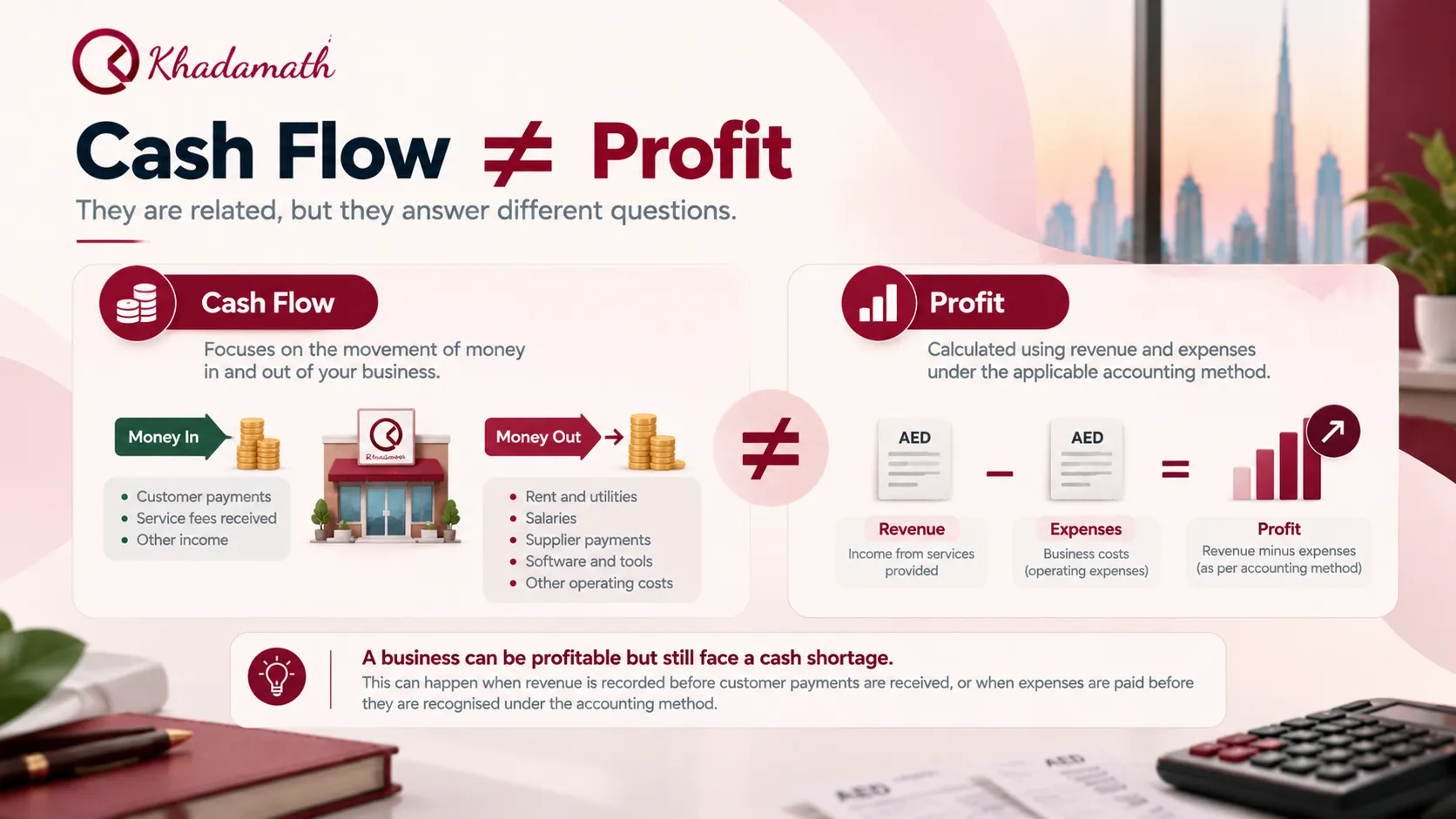
Cash Flow: What Money Is Moving In and Out?
Cash flow focuses on the movement of money into and out of the business over a period. Customer payments, supplier payments, rent and other cash transactions affect the available cash position.
Profit: How Does Revenue Compare With Expenses?
Profit measures the difference between revenue and expenses under the applicable accounting method. The timing of when revenue and expenses are recognised may differ from when the related money is received or paid.
For example, a business may record revenue for a service before the customer pays. The business may therefore report profit while still waiting for the related cash collection. Similarly, paying for an item and recognising its expense may not always occur in the same accounting period.
The important distinction: Expense tracking helps you understand costs, cash-flow reviews help you assess money movement, and profit reporting helps you evaluate financial performance. Each provides different information, so one should not be treated as a substitute for the others.
Expense Tracking With Spreadsheets vs Software
A spreadsheet can be a practical starting point for a business with a small number of transactions. It allows you to record dates, amounts, categories and descriptions in a format you can customise.
However, as transaction volumes increase, a manual process may require more time to maintain, check and summarise. Records can become inconsistent when multiple people use different files or follow different recording methods.
When a Spreadsheet May Be Enough
- Your transaction volume is manageable.
- One person can maintain the records consistently.
- You can easily locate supporting documents.
- Regular reviews and summaries do not require excessive manual work.
When to Consider Expense-Tracking Software
- You record expenses frequently across different categories.
- You need more structured expense records and summaries.
- Supplier-related costs need regular review.
- You want expense records alongside other business-management information.
Software does not remove the need for accurate data entry, supporting documents or regular reviews. Choose a system based on the features your business actually needs, and verify how each feature works before relying on it for a particular accounting process.
If your business is still managing several processes manually, read 5 Signs Your Service Business Has Outgrown Excel to help assess whether your current workflow needs to change.
How Khadamath Supports Expense Tracking
For service businesses that want expense records alongside their wider operating activities, Khadamath business management software includes features for recording expenses and reviewing financial information.
Its documented features relevant to expense tracking include:
- Expenses: Record and categorise business expenditures.
- Expense Groups: Organise related costs into groups.
- Expense Ledger: Review detailed expense records.
- Expense Report: Access expense summaries.
- Suppliers: Manage supplier-related information.
- Cash Book: Review daily cash-flow information.
- Profit Report: Review business profitability information.
These features can help businesses organise expense information and review different aspects of their financial activity. The value depends on recording transactions accurately and using the relevant reports as part of a consistent review process.
Expense management is also connected to other business processes. For example, reviewing customer collections and outstanding payments alongside expenses can provide a more useful view of operating needs. See How to Track Outstanding Payments in a Service Business for practical guidance on monitoring amounts customers still owe.
For businesses looking at the wider billing workflow, How to Automate Billing and Invoicing for a Service Business explains how to approach billing more systematically.
If your business also receives customer advances or maintains credit balances, read How to Track Customer Advances and Credit Balances in a Service Business. These records are different from expense records, but both can matter when reviewing the business's overall financial position.
You can review the available features and plans on the Khadamath software page to determine whether they fit your business requirements.
Expense Records and UAE Businesses
Service businesses operating in the UAE should maintain organised financial records and understand the recordkeeping obligations that apply to their particular circumstances. The records required and the applicable retention period may depend on the business's legal and tax position.
The UAE Federal Tax Authority has published guidance on accounting records and supporting documents, including record-retention requirements for relevant taxable persons and exempt persons. Businesses should check the current requirements applicable to them rather than assume that one rule covers every situation.
As a practical measure, keep expense records complete, retain relevant invoices and receipts, and ensure supporting documents can be located when needed. Consult a qualified UAE tax or accounting professional if you are unsure which records your business must retain or how a particular expense should be treated.
Business Expense-Tracking Best Practices
Use these practices to make expense tracking more consistent and useful:
- Record transactions promptly: Avoid leaving expenses unrecorded for long periods.
- Use clear categories: Keep category names consistent and meaningful.
- Retain supporting records: Organise relevant receipts, invoices and bills.
- Check entries regularly: Look for missing information, duplicates and unusual changes.
- Review recurring costs: Monitor rent, subscriptions, supplier costs and other regular expenses.
- Separate cash flow from profit: Review money movement and business performance as different measures.
- Use reports appropriately: Treat summaries as decision-support information and investigate figures that need explanation.
- Follow applicable recordkeeping rules: Check the requirements relevant to your business and retain records accordingly.
A repeatable process is more useful than an elaborate system that is difficult to maintain. Start with accurate records, review them consistently and improve the process as your business grows.
Conclusion
Tracking business expenses starts with recording transactions promptly, using consistent categories, keeping supporting documents and reviewing costs regularly. A daily, weekly and monthly routine can help UAE service businesses maintain more organised records and identify spending patterns that need attention.
Remember that expense tracking, cash-flow monitoring and profit reporting serve different purposes. Reviewing them together can give you a clearer understanding of operating costs, money movement and business performance.
Whether you use a spreadsheet or business-management software, choose a process your team can follow consistently. As your needs grow, structured expense records and reports can make routine financial reviews easier to manage.
Bring Your Business Expenses Into Better View
Explore how Khadamath brings expense recording, expense groups, expense reports, supplier information and daily cash-flow visibility into your wider business-management workflow.
See Khadamath in Action