For many service businesses, a quotation is the first formal step between a customer request and the work that follows. A customer asks for a service, the business prepares a price, sends the quotation, waits for a decision, and then moves toward service delivery and billing.
When quotations are managed manually through Excel, Word files, emails, messaging apps or separate records, it can become difficult to keep track of what was quoted, which customer received it, what services were included and what should happen next.
This is where quotation management becomes important. It is not simply about creating a professional quotation. It is about organizing quotations throughout the business process, from the initial customer request through service delivery and billing.
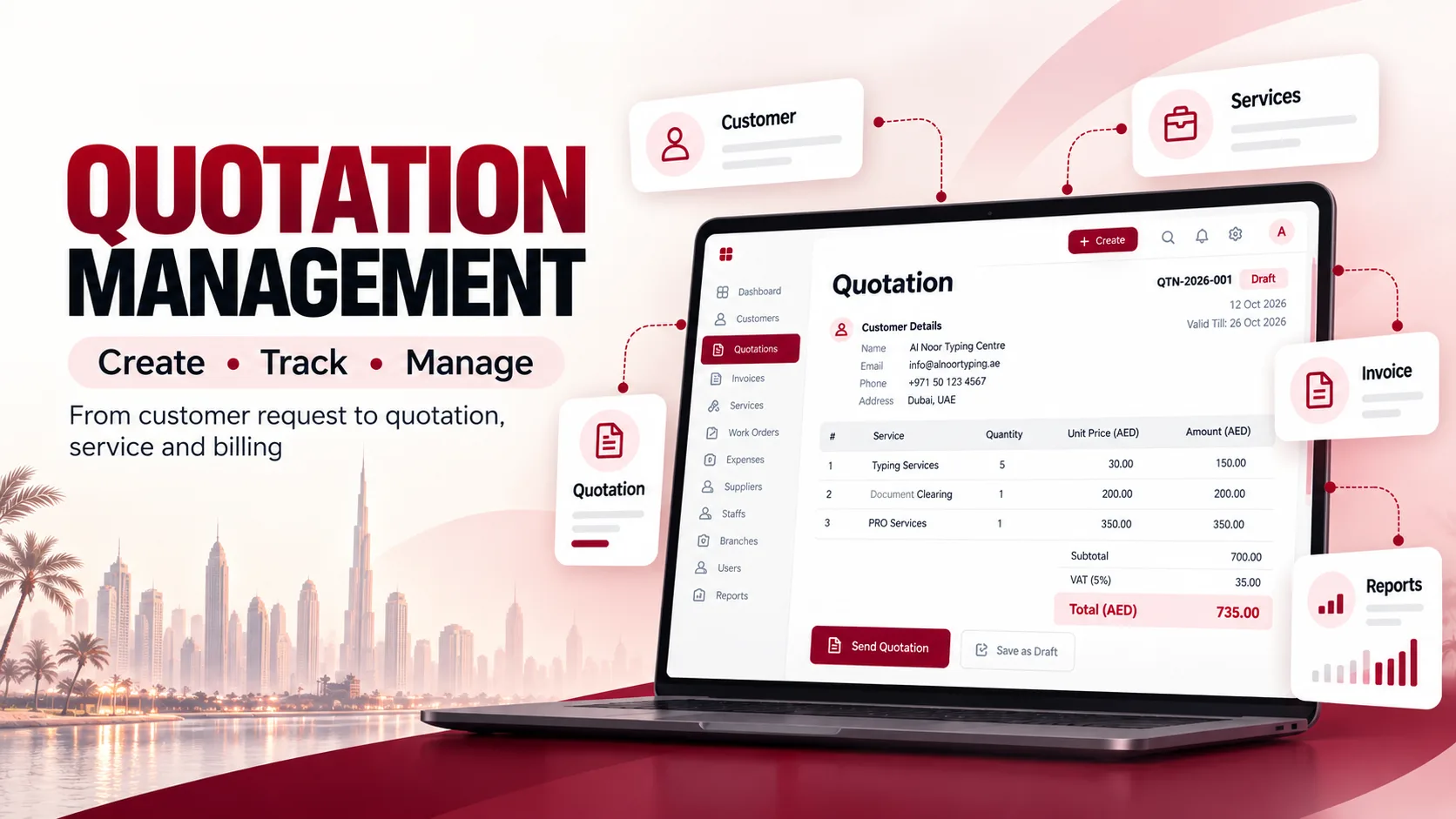
What Is Quotation Management?
Quotation management is the process of creating, organizing, sending, tracking and maintaining business quotations throughout their lifecycle.
A quotation normally communicates the services being offered, the applicable prices, relevant terms and other information a customer needs before deciding whether to proceed.
For a service business, quotation management can therefore involve more than generating a document. The business may need to connect the quotation with the customer, selected services, operational work and eventually billing.
A structured quotation process can make it easier for a business to understand which requests are still being considered, which quotations have progressed and which customer requirements need further action.
Why Is Quotation Management Important?
Quotations are often part of the early stages of a service transaction. If quotation information is scattered across spreadsheets, documents, emails and messaging applications, maintaining a clear record can become difficult as the number of customers and services increases.
Common challenges can include:
- Difficulty finding previous quotations
- Inconsistent quotation formats
- Manually entering customer and service information repeatedly
- Difficulty tracking quotation status
- Limited visibility into which customer requests progressed
- Difficulty connecting quotations with later billing activities
A structured quotation management process helps keep quotation information organized and makes the transition from customer request to service and billing easier to follow.
How Does the Quotation Management Process Work?
A typical service-business quotation process can be viewed as a sequence of connected steps:
- Customer request: The customer explains the service they require.
- Service selection: The business identifies the relevant services and pricing.
- Quotation creation: The business prepares a quotation containing the required details.
- Quotation delivery: The quotation is shared with the customer.
- Customer decision: The customer reviews the quotation and decides whether to proceed.
- Service delivery: Once the customer proceeds, the required service work can move forward.
- Billing: The relevant information can then form part of the billing process.
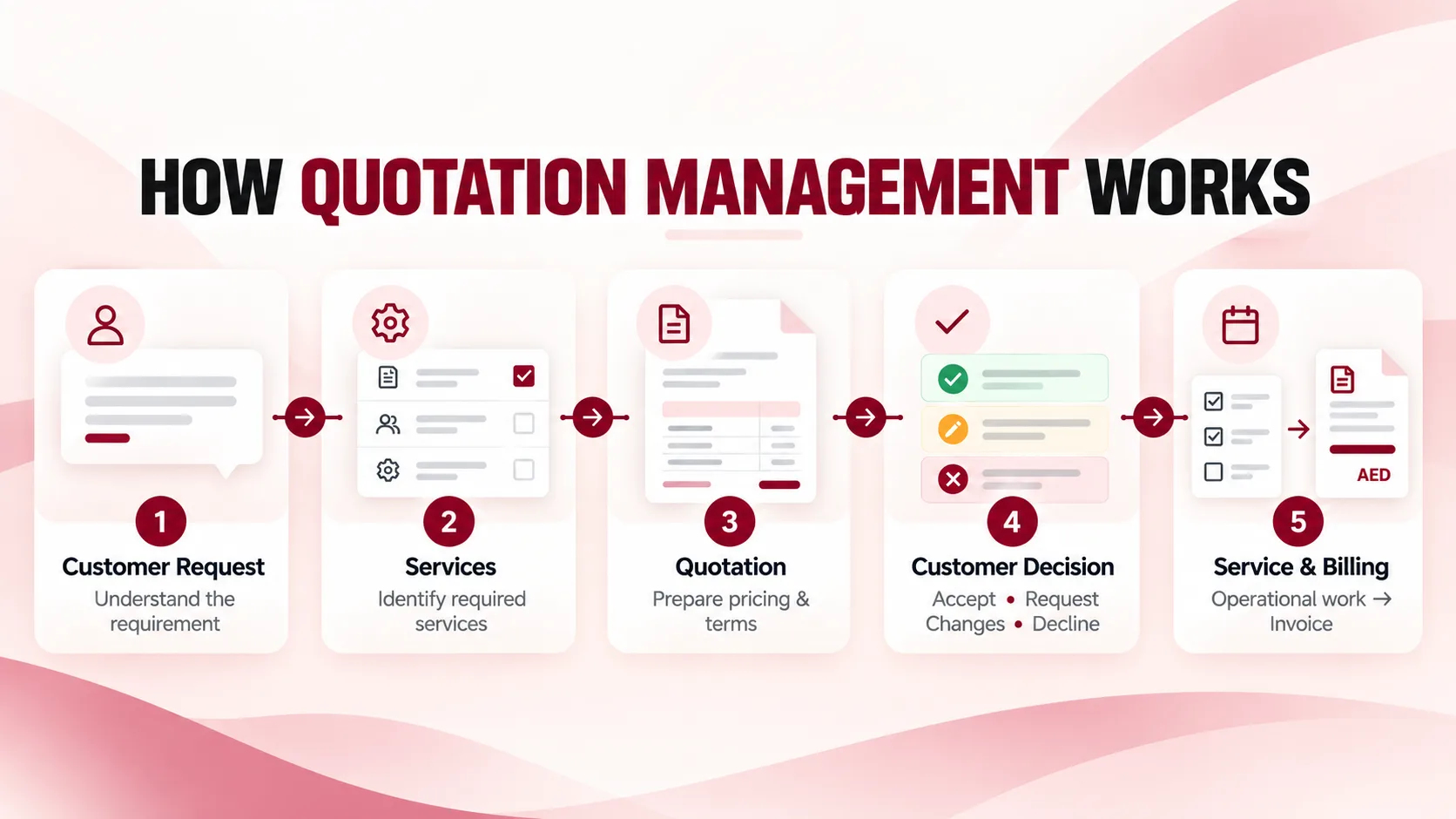
The exact process can vary depending on the type of service business, but the important principle is that the quotation should remain connected to the wider business workflow rather than becoming an isolated document.
Quotation vs Invoice: What Is the Difference?
Quotations and invoices serve different purposes, even though both can contain customer, service and pricing information.
| Quotation | Invoice |
|---|---|
| Price proposal for the customer | Billing document for services or goods provided |
| Used before the customer proceeds | Used as part of the billing process |
| Helps communicate proposed pricing | Records the amount to be billed |
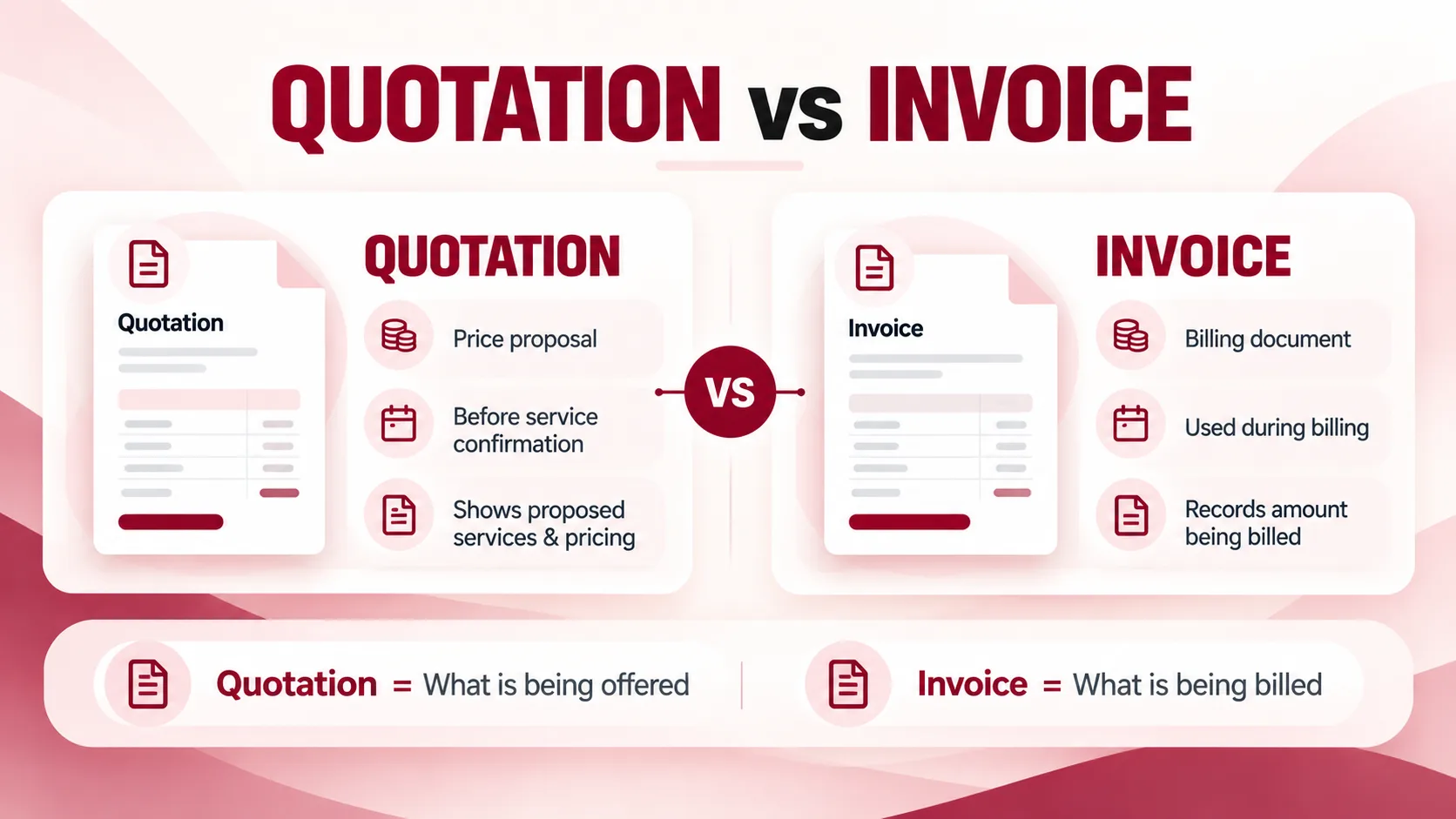
Understanding this distinction is important because quotation management and billing and invoicing for a service business are related but are not the same process.
What Should Quotation Management Software Include?
The exact features differ between software products, but service businesses generally need quotation tools that support the wider quotation process rather than only document creation.
Useful capabilities can include:
- Quotation creation
- Customer information management
- Service and pricing information
- Professional quotation formats
- Quotation tracking
- Quotation records and history
- Connection with customer and service records
- Integration with wider billing and operational workflows
For a service business, the value of quotation software is therefore not limited to producing a quotation document. The surrounding workflow is equally important.
When Should a Service Business Consider Quotation Software?
A business may start with Word, Excel or simple document templates when quotation volume is low. As the number of customers, services or employees increases, managing those quotations manually can become more difficult.
A business may consider structured quotation software when:
- Quotation requests are becoming more frequent.
- Multiple employees prepare quotations.
- The business offers many different services.
- Customer information is being maintained in multiple places.
- Employees need to find previous quotations regularly.
- Quotations need to connect with invoicing or other business processes.
- Management needs better visibility into quotation activity.
Quotation Software vs Excel
Excel can be useful for basic quotation calculations and maintaining simple records. However, a spreadsheet is not necessarily designed around the complete workflow of a service business.
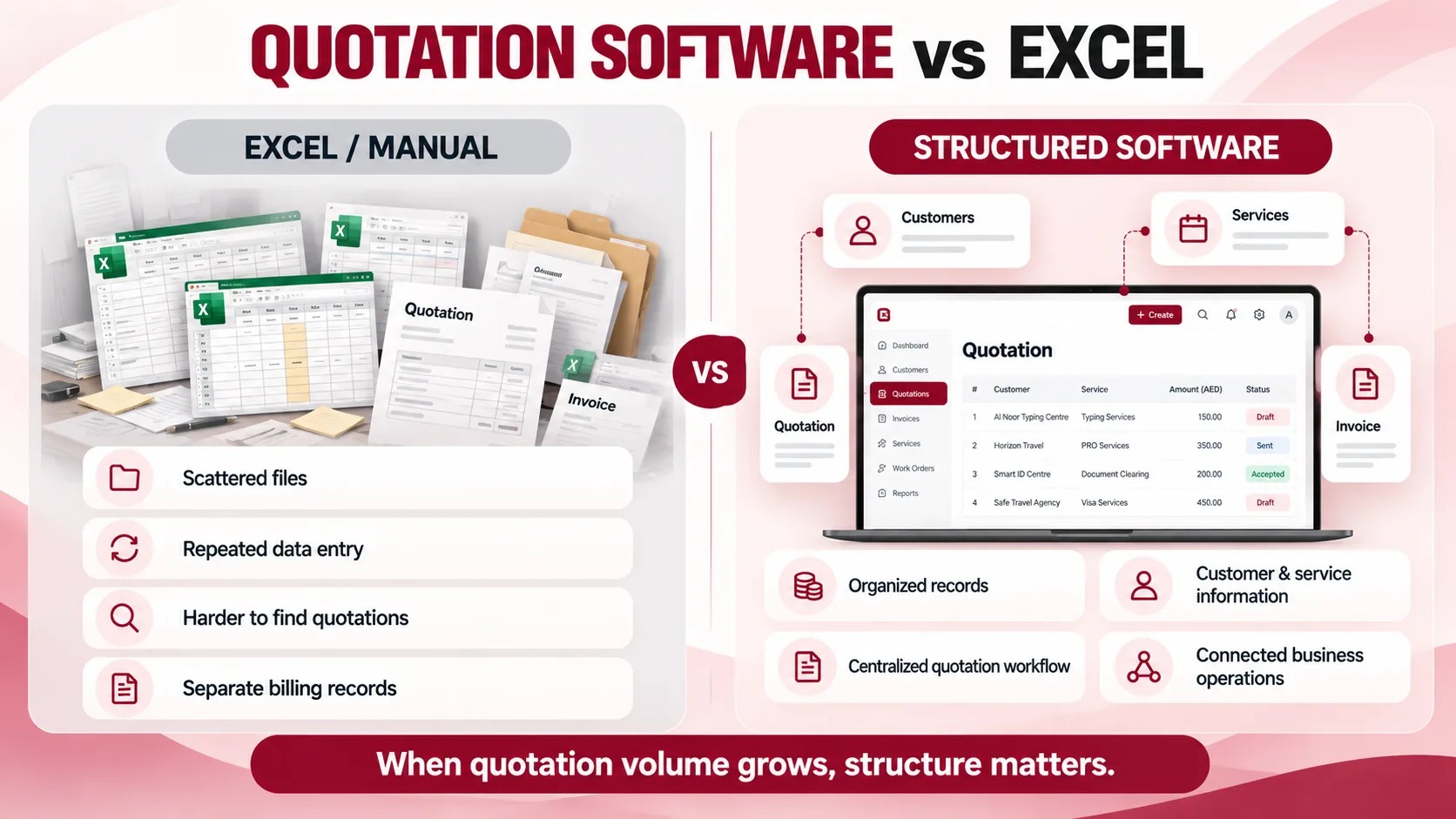
| Excel / Manual Process | Structured Quotation Software |
|---|---|
| Spreadsheet-based records | Dedicated quotation records |
| Manual document management | Structured quotation workflow |
| Customer information may be maintained separately | Customer and quotation records can be connected |
| More manual tracking as volume increases | Designed around recurring quotation activity |
If a service business is experiencing broader difficulties with spreadsheet-based service-business management , quotation management may be one part of a larger workflow that needs to be reviewed.
How Does Quote-to-Invoice Workflow Work?
A quotation does not exist separately from the rest of the customer transaction. Once a customer agrees to proceed, the information from the quotation becomes relevant to the service and billing stages.
A connected workflow can be understood as:
Customer Request → Services → Quotation → Customer Decision → Service → Billing
Keeping these stages connected can reduce unnecessary repetition of customer and service information and provide a clearer record of how a customer request progressed through the business.
This is particularly relevant for service businesses where a single customer may request several services before the final billing stage.
To learn how to organize multiple requests under one customer, read our guide on managing multiple services for the same customer .
After billing begins, businesses may also need a structured way to monitor outstanding payments and customer balances.
Businesses that collect advance payments can also learn how to track customer advances and credit balances to maintain clearer customer account records.
Quotation Management for UAE Service Businesses
Quotation management is relevant to many service businesses operating in the UAE, particularly businesses that regularly receive customer requests and provide prices before beginning the required work.
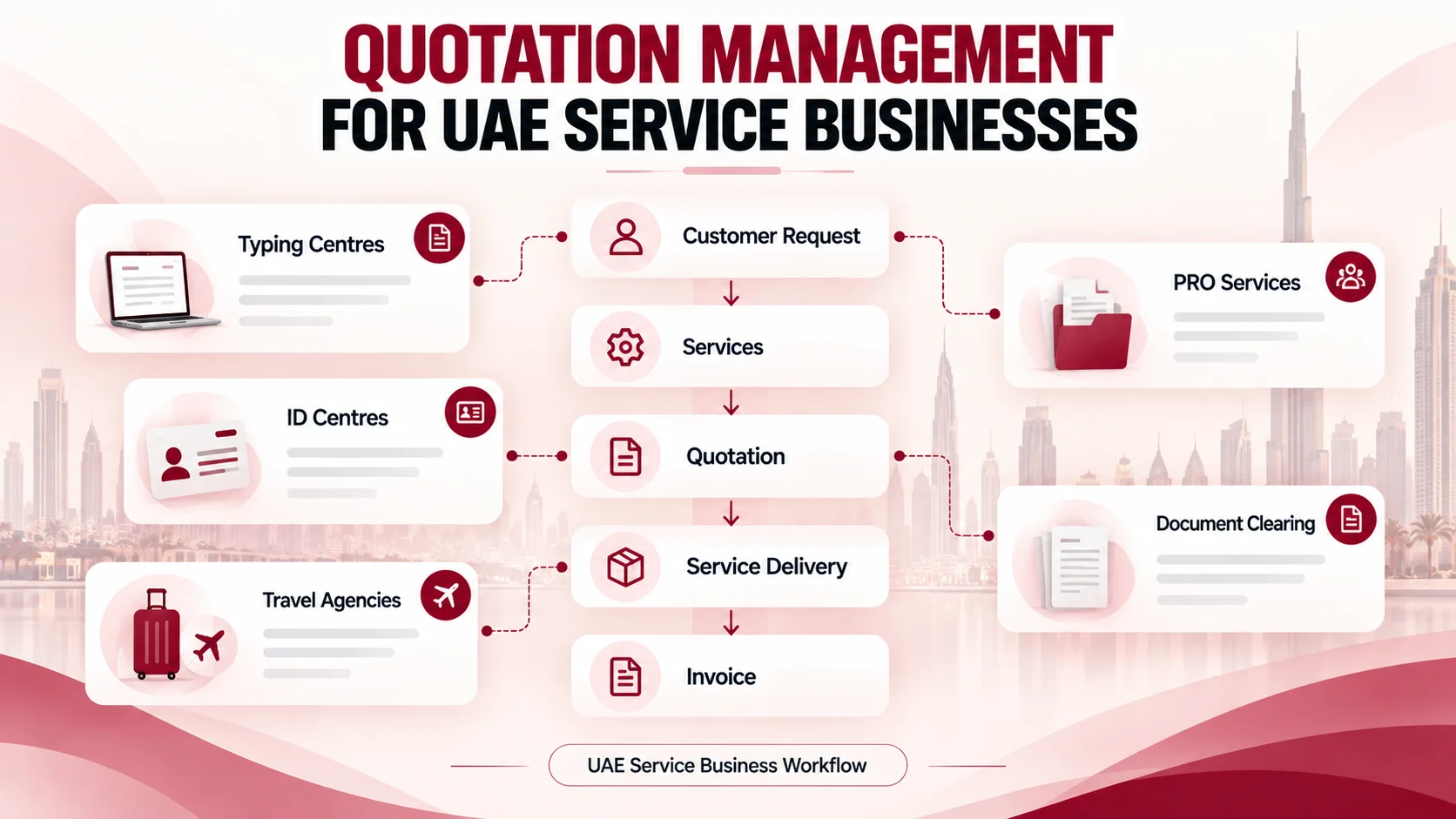
Examples include:
- Typing centres
- ID centres
- Travel agencies
- PRO service providers
- Document clearing businesses
- Business setup service providers
- Other service-based SMEs
These businesses can handle multiple customers and different service requests, making organized customer, service, quotation and billing records particularly useful.
Example: Quotation Management in a UAE Typing Centre
Consider a typing centre that receives a customer request for several services.
Instead of maintaining the customer request in one place, the quotation in another document and billing information separately, the business can structure the process around the customer and requested services.
- The customer requests several services.
- The business identifies the required services and pricing.
- A quotation is prepared and shared with the customer.
- The customer decides which services to proceed with.
- The required service work is recorded.
- The relevant information moves into the billing process.
The benefit of this approach is not simply having a better-looking quotation. It is having a clearer record of the customer journey from request to service and billing.
How Khadamath Connects Quotations With Business Operations
Khadamath Accounts & Operations is designed for service businesses that need to manage more than quotations alone.
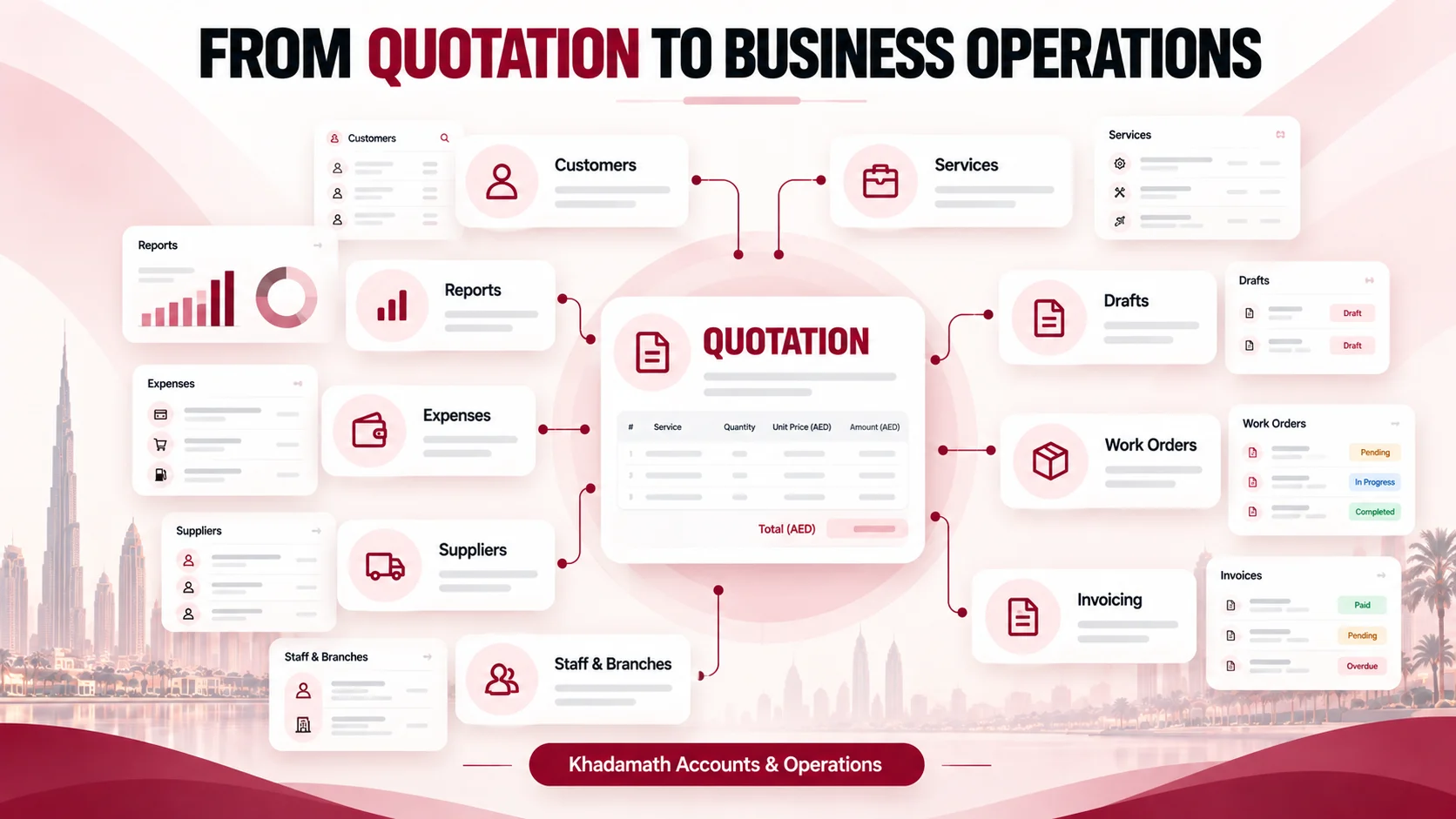
The platform brings together areas such as:
- Customers
- Services
- Quotations
- Drafts
- Invoices
- Work orders
- Expenses
- Suppliers
- Staff
- Branches
- Users
- Reports
This allows quotation management to sit within a broader service-business workflow instead of being treated as an isolated document-generation activity.
Khadamath also provides different software plans, with higher tiers including additional accounting reports such as Trial Balance, Balance Sheet and Profit & Loss.
What Does a Service Business Need Beyond Quotation Creation?
Creating quotations is only one part of running a service business. Once a customer accepts a quotation, the business still needs to manage the actual service, customer information, billing, expenses, staff and reporting.
This means a service business management system may need to support a wider workflow:
Customers → Services → Quotations → Work → Billing → Payments → Reporting
A broader service-business management workflow can help businesses think beyond individual documents and consider how customers, services, quotations, work and billing fit together.
A quotation management system can therefore be most useful when it fits into this wider operational context.
Quotation Management Best Practices
Whether quotations are managed manually or through dedicated software, a few practices can help maintain a more organized process.
- Keep customer information accurate. Make sure the quotation contains the correct customer details.
- Clearly describe the services. Customers should be able to understand what is included in the quotation.
- Maintain consistent pricing information. Use clear and accurate prices for the services being offered.
- Use a consistent quotation format. A standardized format makes quotations easier to prepare and review.
- Keep quotation records organized. Previous quotations should be easy to locate when required.
- Track what happens after the quotation. A quotation should not become an isolated document once it is sent.
- Connect quotation information with billing where appropriate. This can reduce unnecessary repetition when a customer proceeds with the service.
Conclusion
Quotation management is more than creating a professional price proposal. For a growing service business, it involves organizing customer requests, services, quotations and the steps that follow.
A structured process can make it easier to maintain quotation records, understand customer requests and connect quotations with service delivery and billing.
For service businesses that have moved beyond simple document-based workflows, quotation management software can become part of a broader business management system.
The goal is therefore not simply to manage more quotations. It is to manage the business process that happens around them.
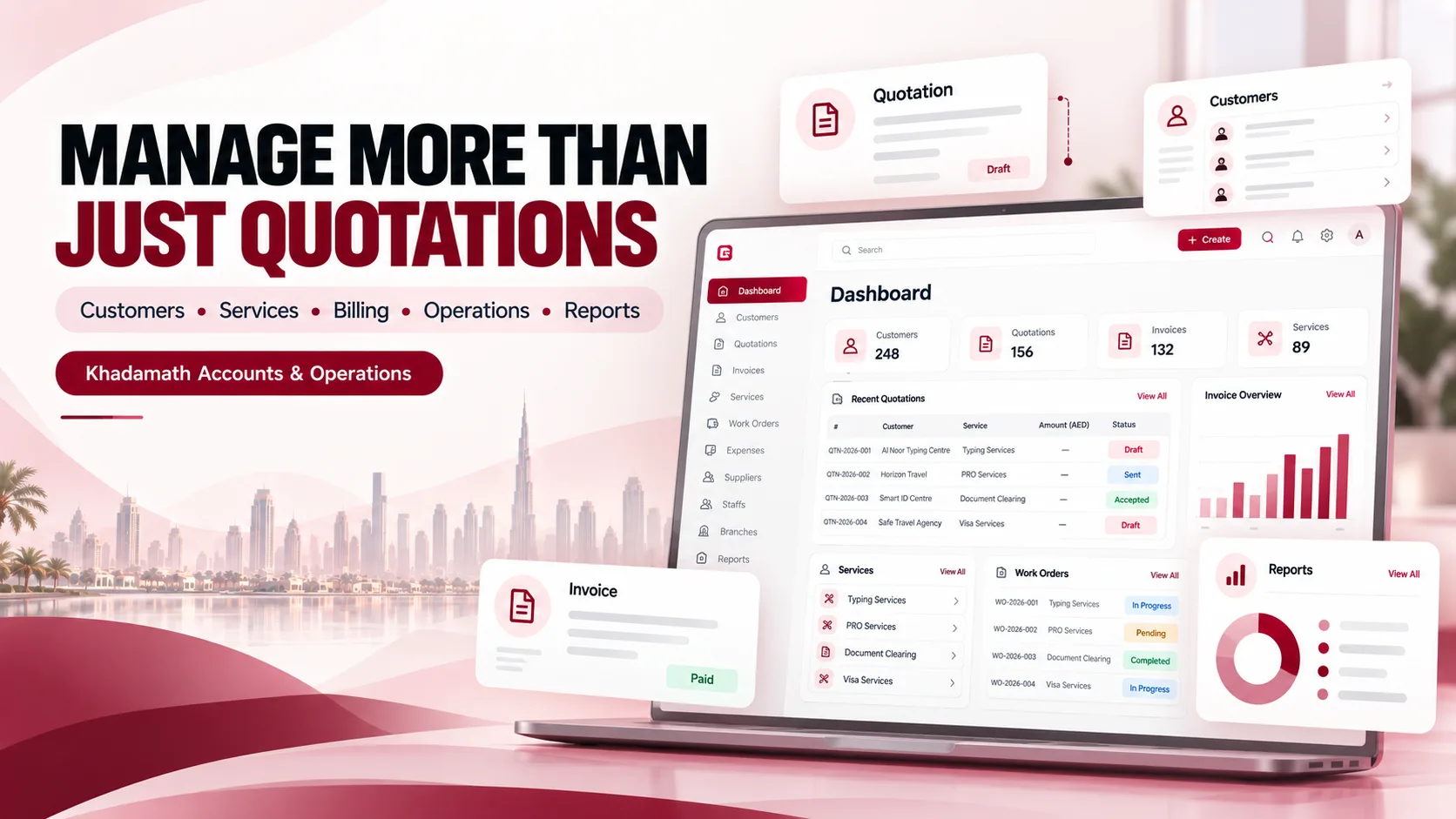
Manage More Than Just Quotations
Connect customers, services, quotations, drafts, invoicing, work orders, expenses and reporting in one connected platform with Khadamath.
See Khadamath in Action